The digital publishing landscape, particularly on platform’s like Amazon KDP and Etsy has undergone a significant shift in 2026. While the “low-content” gold rush of lined journals has cooled, a massive demand remains for high-value, educational activity books. For parents and educators. “How to Draw” books for the 3-5 age are evergreen essentials.
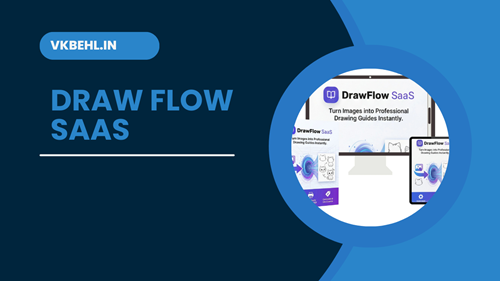
Draw Flow SaaS enter this space not just a design tool, but as a specialized automation engine designed to simply the most time consuming part of this niche. The deconstruction of art into teachable steps.
Understanding the Core Utility: Why Use Draw Flow?
The primary hurdle for most aspiring Amazon KDP authors is the “talent gap.” You may have a brilliant idea for a “Sea Creature” drawing book, but if you aren’t an illustrator, hiring a freelancer can cost hundreds of dollars per project.
Draw Flow solves by utilizing Visual Decomposition logic. It takes a complex character and automatically breaks it down into exactly four simple, manageable steps. This is mathematically and educationally optimized for toddlers who are just developing their fine motor skills. It moves the user from being a “struggling artist” to a “creative director”, focusing on market research and book assembly rather than individual brushstrokes.
Strategic SEO: Ranking in a Competitive Market
To build a sustainable brand, your books need to be discoverable. Draw Flow products align naturally with high-intent search terms used by parents and teachers.
- Primary Keywords: Preschool drawing workbooks, KDP activity book interiors, Esty printable drawing facts.
- Target Niche: Early childhood education (ages 3-5) fine motor skill development, screen-free toddler activity.
- E.E.A.T Factor: Google prioritizes content that demonstrates Experience and Expertise. By creating instructional content (teaching a child a skill) rather than just static coloring pages, your products are categorized as “high value educational assets.” This helps prevent the “thin content” flags that often plague automated book creators.
Product Comparison: Draw Flow Vs. The Industry Giants
How does Draw Flow compare to the tools most veterans use?
| Feature | Draw Flow SaaS | Canva Pro | Book Bolt |
| Best For | Automated Step-by-Step Drawing | General Graphic Design | KDP Research & Templates |
| Automation | High (Visual Deconstruction) | Low (Manual Tracing) | Medium (Generic Interiors) |
| Pricing Model | One Time Payment | Monthly Subscription | Monthly Subscription |
| KDP Optimization | Auto-formatted PDF Formats | Manual Setup Required | Built-in KDP Standard |
The Verdict: If you are building a specific “How to Draw” empire, canva is too manual, and Book Bolt is too generic. Draw Flow provides the precise “middle-ware” needed to create unique, instructional content at scale.
Pros and Cons
✔ Pros
- Financial Lean-Ness: The one time payment model is a major win for small businesses. It eliminates recurring overhead, ensuring your profit margins remain high.
- Market Speed: You can move from a trending idea to a finished 50 page KDP ready PDF in under 30 minutes.
- Rights Ownership: Includes full commercial and PLR rights, meaning you keep 100% of your royalties and can even sell the templates.
❌ Cons
- Internet Dependency: As a cloud based SaaS, you cannot work on your projects without active connection.
- Narrow Focus: This is a precision tool. It is excellent for drawing/activity books but won’t replace a full suite like Photoshop for complex artistic projects.
Who Should Use Draw Flow?
1. KDP Entrepreneurs Focused on Speed and Volume
Creators publishing on Amazon KDP often need to test multiple niches quickly without investing heavinly in custom illustrations. Draw Flow helps reduce production time by automating the step-by-step drawing breakdown process. Instead of spending hours manually designing progressive drawing stages, publisher can generate structured interiors rapidly and move straight to formatting, cover creation and listing optimization. This makes it ideal for entrpreneurs who prioritize speed, scalability and niche testing over artistic customization.
2. Etsy Printable Sellers
Sellers on Etsy frequently create downloadable educational worksheets and activity packs. Draw Flow supports this workflow by generating clean, black and white step based drawing pages that are easy to bundle into themed digital products. Because the format is consistent and structured, it fits well within printable learning kits designed for parents, teachers and homeschool buyers.
3. Homeschool and Preschool Education Creators
The platform is especially aligned with early childhood development goals. The four-step drawing structure supports fine motor skill development, hand eye coordination and shape recognition. Since preschool learners benefit from simplified visual progression, the tool’s standarized breakdown format matches this age group’s cognitive abilities.
4. Niche Publishers Building a Series Brand
If your business model centers around producing themed drawing books such as animals, vehicles or seasonal collections. Draw Flow can serve as a backend production system. Its consistent strucutre helps maintain uniformity across an entire series, which strengthens brand identify and reduces production.
Who Should Not Use Draw Flow?
1. Advanced or Professioanl Illustrators
Experienced artists who require full creative control over anatomy, perspective, shading, stylization and expressive detail may find the platform limiting. Draw Flow emphasizes simplication and structure rather than artistic nuance. If illustration quality and uniqueness are your primary competitive advantage, manual tools may offer more flexibility.
2. Complex Art or Story Based Projects
The platform is not designed for illustrated storybooks, graphic novels or scene based compositions. It focuses on single character breakdowns rather than multi-character interactions or detailed backgrounds. Creators working on narrative driven projects will likely need more advanced design software.
3. Multi Step Manga or Advanced Drawing Tutorials
Older audiences learning manga or advanced figure drawing typically require many trasitional steps and detaield anatomy progression. Because Draw Flow standardizes output into a four step preschool model, it may feel too simplified for intermediate or advanced learners.
4. Creators Seeking a Full Design Suite Replacement
Draw Flow is not a substitute for comprehensive design platforms like canva or professional creative tools from Adobe. It does not provide advanced layout control, cover design capabilities, branding assets.
Final Assessment: Is it Worth It?
For those serious about the KDP and Etsy side-hustle, Draw Flow addresses the two most expensive resources. Time and Talent by automating the deconstruction of art, it allows you to focus on the business of publishing finding underserved sub-niches and getting them to market before the competition.
Check the Price
If you’re ready to explore how automated drawing books can fit into your digital portfolio, you can find more details and the current launch price here.
Disclosure: This post contains affiliate links. If you click a link and make a purchase. I may receive a small commission at no extra cost to you. Thanks for the support!

I am Vivek, a digital marketer and blogger based in India with 3+ years of experience testing online tools and software.